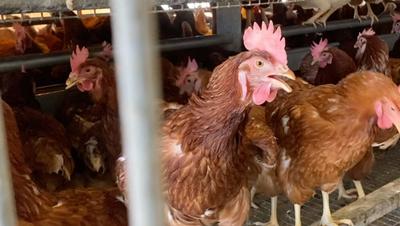
The article discusses how the term "cage-free" is often misleading for consumers when it comes to egg production. It highlights the story of a hen named Lola who was raised in a cage-free environment but still suffered from the same cramped conditions as hens in battery cages. Despite being labeled as "cage-free," Lola was unable to exhibit natural behaviors such as stretching her wings or dust bathing, ultimately leading to poor welfare and living conditions for the hen.
The author argues that consumers should be aware of the misleading nature of the term "cage-free" and consider alternative options such as purchasing eggs from small-scale, pasture-raised farms where hens have access to outdoor space and can engage in natural behaviors. By supporting ethical and transparent egg production practices, consumers can help improve the welfare of hens like Lola and promote more sustainable farming methods. Ultimately, it is important for consumers to educate themselves on the realities of egg production and make informed decisions to ensure the well-being of farm animals.



 Back to News
 Back to News