


 Back to News
 Back to News


Studies & Numbers
Food Could Take Half of the Poorest Households’ Income by 2050, MIT-Led Modeling Finds
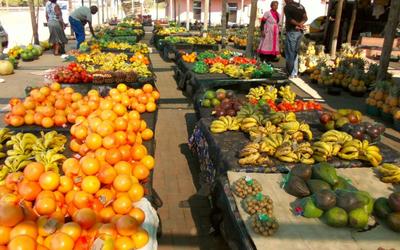
Research led by MIT projects that by 2050, the lowest-earning 10% of the population in parts of southern Africa could spend nearly half of their income on food, compared to only 5.5% for the highest-earning 10%. Similar trends are seen in other regions of Africa, with food burdens for the poorest projected to be as high as 48.4% in West Africa and 42.5% in East Africa. Energy costs also disproportionately affect lower-income households, with burdens reaching nearly 20% in some regions compared to less than 2% for higher-income groups.
The study emphasizes the importance of considering income subgroups rather than regional averages when analyzing food, water, and energy access. The modeling used uncertain factors across various scenarios to predict potential outcomes, highlighting the vulnerability of certain populations to future resource insecurity. The results are not meant as a forecast but rather as a way to understand the conditions that could lead to different resource security outcomes in the future.
The study emphasizes the importance of considering income subgroups rather than regional averages when analyzing food, water, and energy access. The modeling used uncertain factors across various scenarios to predict potential outcomes, highlighting the vulnerability of certain populations to future resource insecurity. The results are not meant as a forecast but rather as a way to understand the conditions that could lead to different resource security outcomes in the future.
*This summary was generated using AI.