

 Back to News
 Back to News


Fermentation
NASA-Funded Research Turns PET Bottles and Crop Waste Into Edible Protein
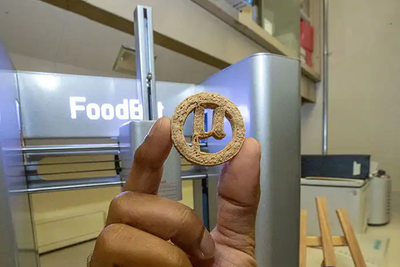
A research team at Southern Illinois University (SIU) Carbondale has developed a process to turn PET bottles, crop residues, and other biomass into edible proteins, vitamins, and flavor compounds. The resulting protein-rich cookie, called µBites, is made using yeasts engineered to metabolize the materials and extruded through a 3D printer. The project, funded by NASA's Deep Space Food Challenge, aims to address both plastic pollution and food security issues by utilizing microbial traits to create valuable products.
The team's innovative approach involves using microbes to convert tough materials into useful food components, such as proteins and vitamins. Additional enhancements include engineering yeasts to produce flavorings from plant biomass and convert harmful chemicals from PET into essential nutrients. The researchers hope to produce all µBites ingredients using microbes, with potential applications in disaster zones, submarines, and even space outposts. By harnessing the power of microbes, the team believes they can help meet the growing global food demand and mitigate hunger risks by 2050.
The team's innovative approach involves using microbes to convert tough materials into useful food components, such as proteins and vitamins. Additional enhancements include engineering yeasts to produce flavorings from plant biomass and convert harmful chemicals from PET into essential nutrients. The researchers hope to produce all µBites ingredients using microbes, with potential applications in disaster zones, submarines, and even space outposts. By harnessing the power of microbes, the team believes they can help meet the growing global food demand and mitigate hunger risks by 2050.
*This summary was generated using AI.