Solar Foods Partners Work on Air Protein System That Runs on Sunlight Alone
Save
Fermentation

Solar Foods Partners Work on Air Protein System That Runs on Sunlight Alone

Vegconomist • Nov 23, 2026
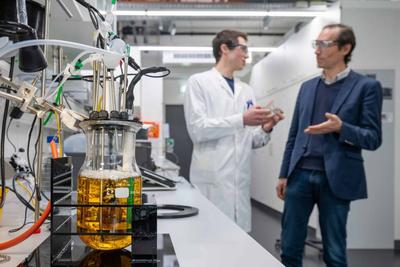
Researchers at the Technical University of Munich (TUM) are pioneering a groundbreaking method for microbial protein production capable of generating its own hydrogen from sunlight, eliminating the need for external hydrogen supplies or electricity. This initiative is part of the SOLARSPOON project, funded by the EU and led by the University of Cambridge in partnership with Solar Foods, known for their protein ingredient Solein. By creating a self-contained unit that captures sunlight for hydrogen production, the team aims to facilitate food production in regions vulnerable to famine and remote locations.

To overcome the challenge posed by hydrogen-producing enzymes that are inhibited by oxygen, TUM has developed a patented polymer film to protect these enzymes. Each partner in the project plays a crucial role: Cambridge harnesses sunlight through photosynthetic bacteria, TUM converts that energy into hydrogen, Solar Foods utilizes the hydrogen for protein synthesis, Imperial College London focuses on producing fats, and the Technical University of Denmark is involved in building the integrated unit. Set to run until October 2029 with nearly €4 million in EU funding, the project aspires to not only enhance protein production but potentially generate fats and other nutritional components from atmospheric resources.
*This summary was generated using AI.
Read Full Article

Related recipes, books, documentaries, and topics from our catalog.

Community reviews

Sign in to leave the first review.

Discussion Join the conversation

Sign in to start the discussion.