


 Back to News
 Back to News


Investments & Finance
European Commission Commits €350M to Strengthen Alternative Protein Production with Fermentation
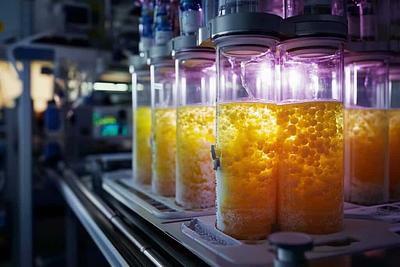
The European Commission has committed €350 million to support food and agricultural innovations, particularly focusing on fermentation technologies to strengthen alternative protein production. The strategy aims to position the EU as a global leader in life sciences by 2030, harnessing biotechnology, digital innovation, and sustainability to create a more sustainable food system. Biomass and precision fermentation are central to this approach, with the potential to transform agricultural byproducts into food products and produce sustainable alternatives like proteins, chocolate compounds, and palm oil.
Scaling these technologies has been challenging, especially for startups and small businesses. The strategy includes measures such as public-private partnerships, annual conferences, and €150 million in funding under the Horizon Europe program to support the development of sustainable bioeconomy solutions. The Commission also emphasizes the economic potential of alternative proteins, with a report suggesting they could add €65 billion to Germany's economy by 2045 and create up to 250,000 jobs, while also making European food production more sustainable. Through strategic research, innovation agendas, and public outreach, the Commission aims to address key challenges in food systems and improve consumer understanding of plant-based options to drive the growth of a more sustainable food system in the EU.
Scaling these technologies has been challenging, especially for startups and small businesses. The strategy includes measures such as public-private partnerships, annual conferences, and €150 million in funding under the Horizon Europe program to support the development of sustainable bioeconomy solutions. The Commission also emphasizes the economic potential of alternative proteins, with a report suggesting they could add €65 billion to Germany's economy by 2045 and create up to 250,000 jobs, while also making European food production more sustainable. Through strategic research, innovation agendas, and public outreach, the Commission aims to address key challenges in food systems and improve consumer understanding of plant-based options to drive the growth of a more sustainable food system in the EU.
*This summary was generated using AI.