


 Back to News
 Back to News


Animals
Is the End of Animal Testing in Sight?
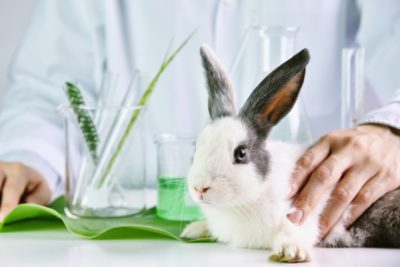
The European Parliament recently passed a resolution to accelerate the transition away from using live animals for research, regulatory testing, and education, marking a positive step towards ending cruel animal testing practices in laboratories. However, despite previous commitments to ending experiments on primates and other animals, progress has been slow due to industry lobbying and lack of binding goals. Animal testing involves subjecting animals to experiments that cause pain, suffering, distress, or lasting harm, including injecting harmful substances, surgical procedures, and force-feeding.
Millions of animals are used in research each year, with some experiencing multiple procedures and others being bred but not used and subsequently killed. While the global figure for animals used in experiments is estimated to be over 115 million annually, not all countries collect accurate data. Alternatives to animal testing, such as human cell cultures, computer modeling, and volunteer studies, are being developed to provide more reliable and humane solutions. Support for campaigns against animal testing, signing petitions, and advocating for legislation to protect animals in laboratories can help progress towards ending this practice.
Millions of animals are used in research each year, with some experiencing multiple procedures and others being bred but not used and subsequently killed. While the global figure for animals used in experiments is estimated to be over 115 million annually, not all countries collect accurate data. Alternatives to animal testing, such as human cell cultures, computer modeling, and volunteer studies, are being developed to provide more reliable and humane solutions. Support for campaigns against animal testing, signing petitions, and advocating for legislation to protect animals in laboratories can help progress towards ending this practice.
*This summary was generated using AI.