

 Back to News
 Back to News
Other News
Scientists Create ‘Vaccine’ To Protect Bees From Pesticides
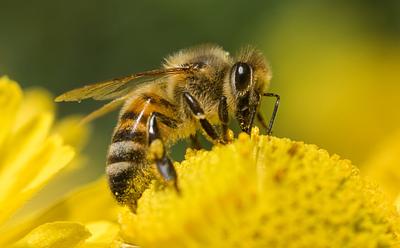
Scientists at Cornell University have developed an ingestible hydrogel microparticle "vaccine" that can protect bees from deadly pesticides commonly used in agriculture. In experiments with common eastern bumblebees exposed to lethal and sublethal doses of imidacloprid, the bees showed a 30 percent higher survival rate after ingesting the microparticles. The particles bind to the pesticides in the bee's digestive tract and are passed out through their waste, allowing them to avoid the toxic effects of the chemicals.
While the study shows promising results, further research is needed to understand how the microparticles would behave with multiple pesticides and how they could be fed to bees in real-world scenarios. Neonicotinoids, the group of pesticides in question, are banned in the EU but widely used in the US. The researchers hope to extend their findings to honeybees, the main species used for commercial crop pollination, to provide a potential solution to the harmful effects of pesticides on bee populations.
While the study shows promising results, further research is needed to understand how the microparticles would behave with multiple pesticides and how they could be fed to bees in real-world scenarios. Neonicotinoids, the group of pesticides in question, are banned in the EU but widely used in the US. The researchers hope to extend their findings to honeybees, the main species used for commercial crop pollination, to provide a potential solution to the harmful effects of pesticides on bee populations.
*This summary was generated using AI.

Explore on VeganHub
Related recipes, books, documentaries, and topics from our catalog.
Recipes
View all recipes

VegNews
Feb 09, 2024


Podcast Episodes
View all podcasts

Community reviews
Sign in to leave the first review.
Discussion Join the conversation
Sign in to start the discussion.

Vegconomist
Oct 19, 2026
Plant Based News
Oct 18, 2026