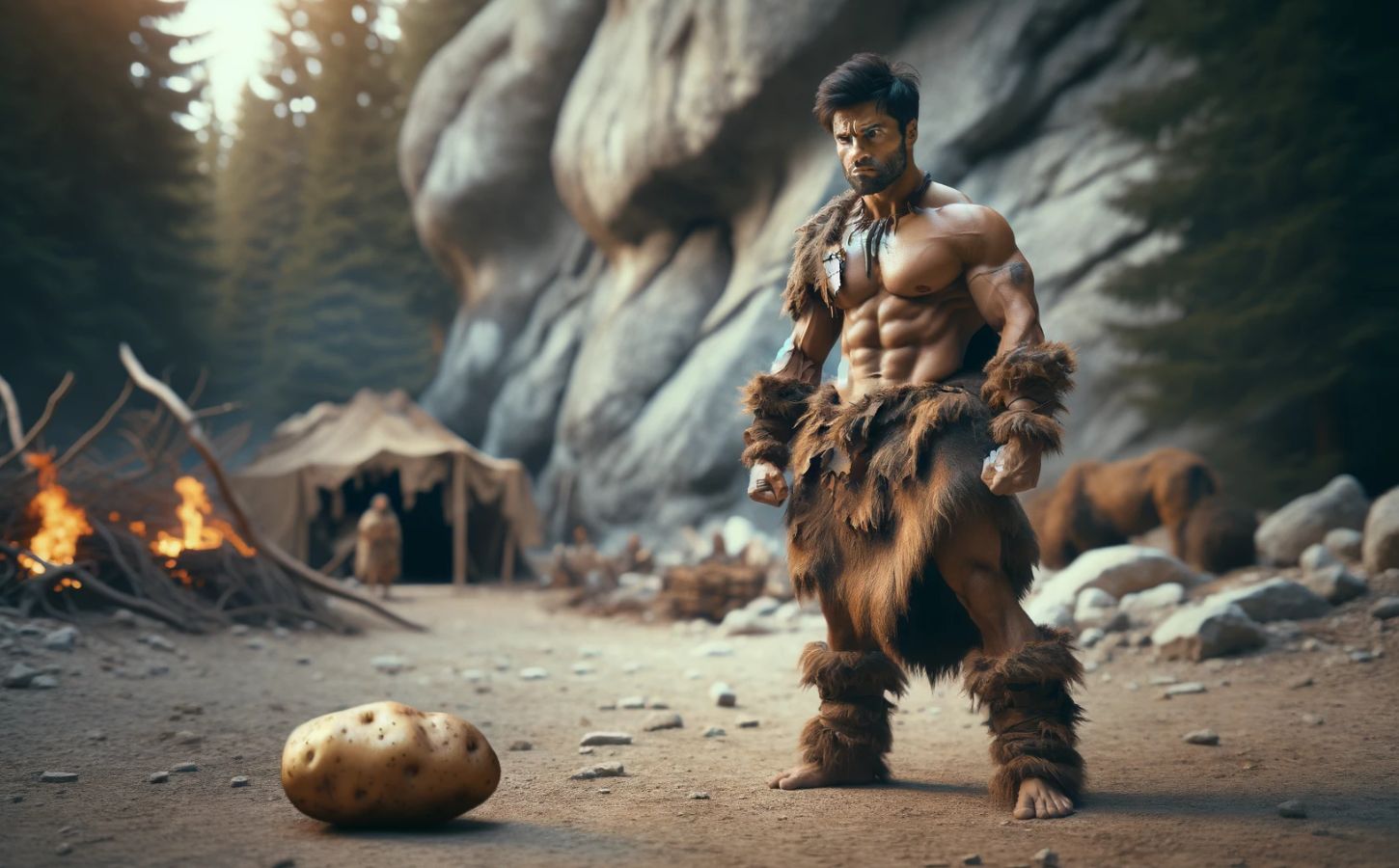
A new study has found that early humans mostly ate plants, challenging the commonly held belief that they had meat-heavy diets. The research focused on individuals from burial sites dating back 9,000 to 6,500 years ago in the Peruvian Andes, revealing that wild potatoes and root vegetables made up around 80% of their diet. This challenges popular diets like the Paleo diet, which advocate for high meat consumption based on the assumption that early humans primarily hunted for food.
The study led by Dr. Randy Haas suggests that modern diets, such as the Paleo diet, may need to be re-evaluated in light of this new evidence. The research also highlights the influence of gender stereotypes on our perceptions of early human diets, pointing out the need to reconsider the "macho caveman" image. By understanding that early humans mainly consumed plant-based diets, there may be opportunities to re-brand veganism as a more appealing and natural dietary choice for men.
*This summary was generated using AI.
Read Full Article