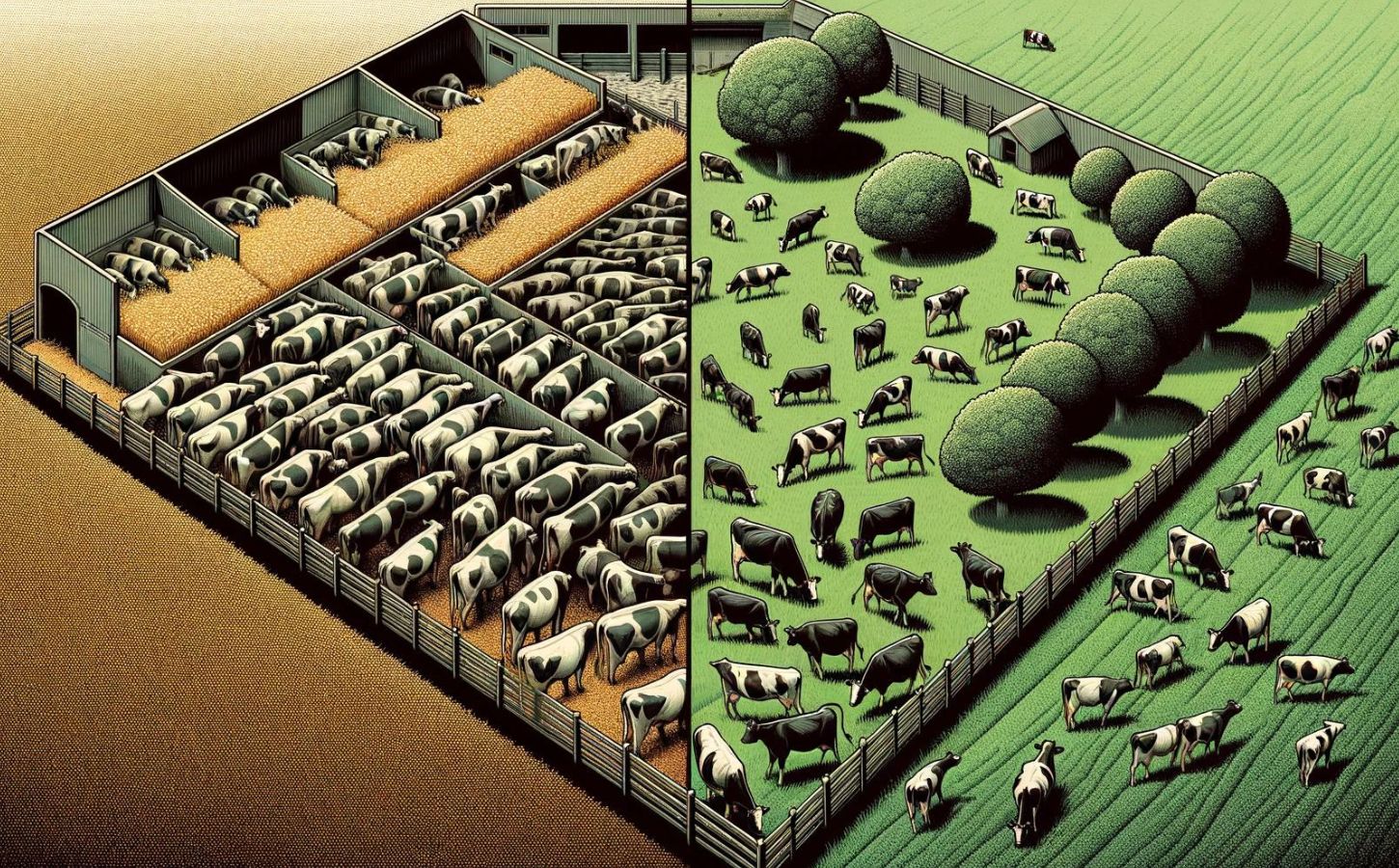
How Meat Emissions Can Lead To More Intensive Animal Farming
Plant Based News • Feb 11, 2024
Animal agriculture is a major contributor to greenhouse gas emissions, with around 16.5 percent of all anthropogenic GHGs and nearly 60 percent of food production emissions coming from meat. The industry is particularly polluting due to methane produced by ruminant animals like cows, as well as factors like manure management and deforestation for pasture and feed crops. To address these emissions, there are two options: reducing meat consumption and farming, or intensifying animal farming for efficiency. Climate scientists advocate for the former, while the meat industry and some governments push for intensification instead.
The demand for meat has increased dramatically since the 1960s, prompting more intensive animal farming practices. While intensification can lower emissions intensity, it comes with negative impacts like environmental pollution, poor animal welfare, and increased risk of disease spread. Despite efforts to reduce emissions through strategies like feed additives and alternative feed sources, research shows that significant emissions reductions can be achieved by reducing meat consumption and transitioning to plant-based diets in wealthy countries.



 Back to News
 Back to News