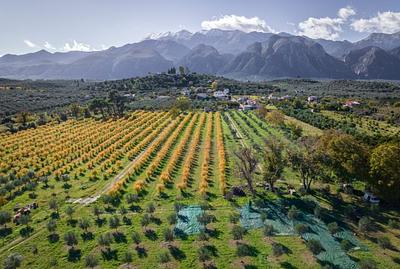
“World’s Largest” Farmer-Led Study Validates Plant-Based Regenerative Farming’s Potential
Vegconomist • Jun 03, 2025
A pan-European study led by the European Alliance for Regenerative Agriculture found that regenerative farming systems, many of which are plant-based, can produce similar or better yields than conventional agriculture while drastically reducing synthetic inputs like fertilisers and pesticides. The study, spanning 78 farms across 14 countries and over 7,000 hectares, introduced a new Regenerating Full Productivity index to measure ecological, climatic, and economic outcomes. Regenerative farms achieved just a 1% lower caloric and protein yield compared to conventional farms, but used significantly less synthetic nitrogen fertiliser and pesticides per hectare, leading to a 27% higher productivity index.
One of the founding farmers, Sheila Darmos, reported triple-digit yields without chemical inputs by using syntropic agroforestry, enhancing biodiversity and water retention. The study's findings position regenerative crop-based systems as a path towards greater autonomy and sustainability, addressing agricultural vulnerabilities such as climate instability and input dependency. EARA's executive director emphasized the importance of transitioning the European agri-food sector towards regeneration for resilience in rural areas and food security, offering a helping hand to fellow farmers to make the transition as smooth as possible.



 Back to News
 Back to News